Summary of March 2018 Ambulance Open Door Forum
CMS held its latest Open Door Forum on Wednesday, March 7, 2018. As with past Open Door Forums, CMS started the call with the following series of announcements:
Medicare Fee Schedule – CMS indicated that the Bipartisan Budget Act of 2018, enacted on February 9, 2018, contained several provisions that impacted the payment of ambulance claims under the Medicare Ambulance Fee Schedule:
- Temporary Add-Ons for Ground Ambulance – CMS indicated that Section 50203(a) of the bill extended the temporary add-ons for ground ambulance services for an additional five years, retroactive back to January 1, 2018. As extended, these add-ons will expire on December 31, 2022. These add-ons increase Medicare’s allowable for ground ambulance base rates and mileage by 2% in urban areas, 3% in rural areas, and by 22.6% (over the applicable rural rate) for services provided in so-called “super rural” areas.
- Cost Reporting – CMS indicated that Section 50203(b) of the bill would require ground ambulance providers and suppliers to submit cost data to CMS. CMS noted that the new law requires CMS to develop, no later than December 31, 2019, a data collection system to collect cost, revenue, utilization, and certain other information related to ground ambulance services. The law provides that cost data will be collected using a survey methodology, with a representative sample of ambulance providers and suppliers being asked to submit cost data in any given year. Finally, CMS noted that, starting on January 1, 2022, providers or suppliers that fail to submit the requested cost data would be subject to a 10% reduction in their Medicare payments, unless otherwise exempted on the basis of significant hardship.
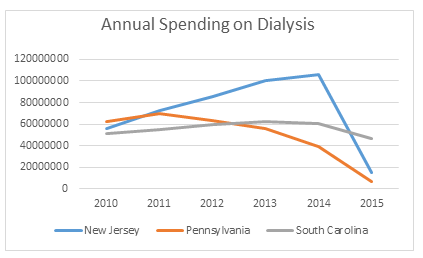
- Additional Reduction in Medicare Payment for Dialysis Transports – Section 53108 of the bill provides that the Medicare allowable for non-emergency, basic life support transports to and from dialysis will be subject to a further 13% reduction. This reduction would go into effect for dialysis transports with dates of service on or after October 1, 2018. This would be on top of the existing 10% reduction in Medicare’s payment for dialysis transports, for a total reduction of 23%.
Temporary Enrollment Moratorium – CMS indicated that the temporary moratorium on the enrollment of new ground non-emergency ambulance providers in Texas was lifted on September 1, 2017. CMS further indicated that the enrollment moratorium was extended for the states of New Jersey and Pennsylvania for an additional six months on January 29, 2018. CMS will need to make a determination on or before July 29, 2018 on whether to lift the moratorium or extent it for an additional six months in that state.
Following the announcements, CMS moved into a brief Question & Answer period. Most of the questions were not answered on the call; instead, CMS took the contact information of the person asking the question, and indicated that they would respond directly to them at a later date. However, the following questions were answered:
- CMS indicated that a Change Request had been sent to all Medicare Administrative Contractors (MACs) informing them of the new, adjusted fee schedule amounts. CMS further indicated that this Change Request, which it indicated was confidential, provided further instructions to the MACs on when and how to adjust claims initially paid at the original 2018 rates.
- CMS confirmed that the adjusted rates are retroactive to January 1, 2018. Accordingly, CMS indicated that claims paid at the original 2018 rates will be adjusted by the MACs at some future date.
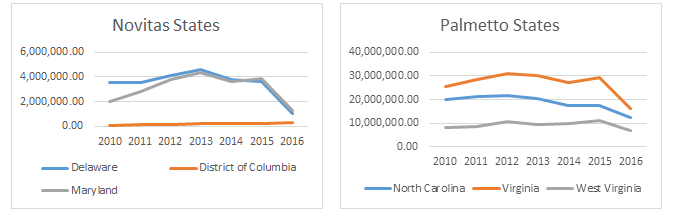
- CMS indicated that it recently released its First Interim Evaluation Report on the Medicare Prior Authorization Model for repetitive, non-emergency ground ambulance transports. CMS further indicated that it was still reviewing this report, and that no decision has yet been made on the extension of this model within the existing 9 states and the District of Columbia and/or the expansion of the model to additional states.
Have questions? Please write to the Werfels at bwerfel@aol.com.